
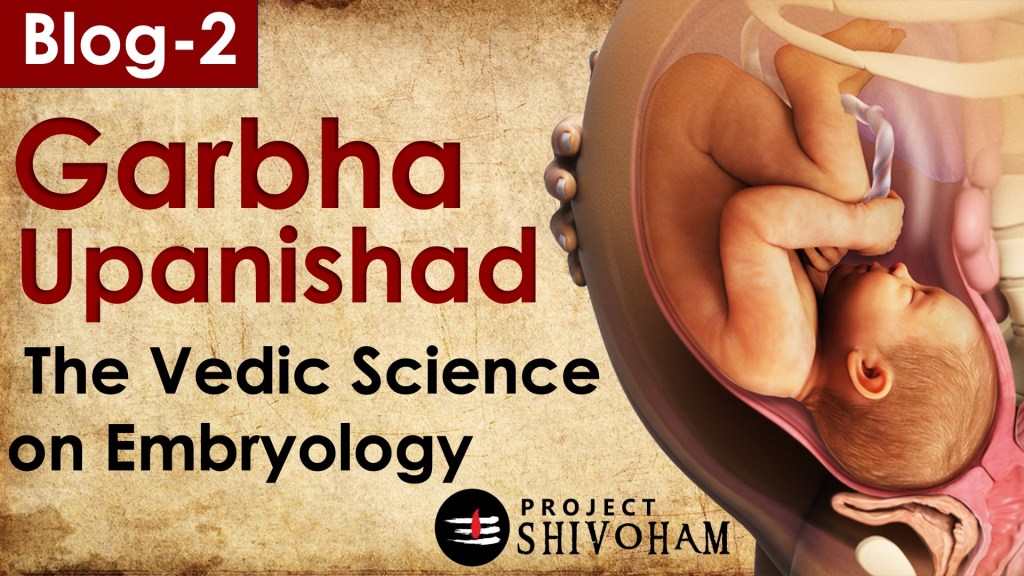
The Garbha Upanishad, one of the lesser-known gems of Vedic literature, offers an awe-inspiring insight into embryology—thousands of years before modern science could even dream of delving into such complexities. Written by ancient rishis with knowledge that defies the boundaries of time, the Garbha Upanishad describes the stages of human development with remarkable precision, demonstrating an understanding of biology that astonishes scientists even today. How could these sages, without microscopes, sonography, or any modern tools, unveil the secrets of the womb in such stunning detail? This is the brilliance of the Vedas, a testament to the limitless wisdom they encapsulate.
The Garbha Upanishad speaks with clarity and accuracy on how life is conceived, grows, and develops within the mother’s womb. It explains the process of fertilization, the formation of the embryo, and its progression through various stages of development—all of which are strikingly similar to the findings of contemporary embryology. The Upanishad describes how the panchamahabhutas—the five great elements (earth, water, fire, air, and ether)—combine to form the body, guided by the subtle energies of prana (life force). The details it provides about the fetus’s development, from the formation of limbs to the appearance of consciousness, leave modern readers both bewildered and mesmerized.
According to the Garbha Upanishad, by the seventh month, the soul becomes fully conscious, and the fetus starts reflecting on its past lives, understanding the karmic consequences of its actions, and even praying for liberation from the cycle of birth and death. Such profound metaphysical observations combined with biological details make this Upanishad not just a treatise on human development but also a spiritual guide for life itself.
What leaves scientists flabbergasted is the detailed account of embryonic growth described in the text. The Garbha Upanishad states that in the first month, the embryo is a mere mass of cells; in the second, it develops a distinct shape; by the third month, limbs begin to form, and by the fourth, consciousness arises. Such descriptions align remarkably with modern embryological timelines! Could this be coincidence? Hardly. The ancient rishis possessed an intuitive knowledge of life’s creation, passed down through an unbroken chain of enlightened beings who lived in perfect harmony with the cosmos.
But this is not where the story ends. The wisdom of the Garbha Upanishad caught the attention of Western scholars as early as the 19th century. Esteemed researchers like Jean Filliozat, a French Indologist, were intrigued by the advanced knowledge contained in this ancient text. Filliozat, among others, researched Indian medical texts and commented on the uncanny parallels between the Vedic understanding of human development and modern discoveries. The fascination didn’t stop there. British anatomist Edward Byles Cowell and German scholar Paul Deussen also explored Vedic texts, amazed at the scientific insight embedded within the Upanishads.
It is mind-boggling to think that thousands of years ago, in the remote forests and riverbanks of ancient India, sages were decoding the mysteries of life at a level modern science only reached a few decades ago. The depth of knowledge in the Vedas, and specifically the Garbha Upanishad, reveals that ancient Indian wisdom was far ahead of its time, blending spirituality and science in a way that still captivates researchers today.
The Garbha Upanishad isn’t just a relic of the past—it’s a reminder that our ancestors knew far more about the universe and the creation of life than we often give them credit for. It proves that the rishis weren’t just philosophers—they were scientists, deeply aware of the physical and metaphysical laws that govern existence. Their ability to understand and document such intricacies of life in the womb remains one of the greatest marvels of Vedic knowledge, a true treasure trove for those who dare to explore its depths.
The Garbha Upanishad shines a bright light on the infinite intelligence of the Vedas, demonstrating the unparalleled foresight of the ancient Indian seers. It’s a profound example of how ancient wisdom, long before the advent of modern technology, reached the heights of intellectual achievement that continue to inspire and astonish the world today.
Here below is a detailed documentary on Garbha Upanishad from Project Shivoham
 Project Shivoham